Piezoelectric Transducers
With piezoelectricity we refer to the phenomena in which electric charge accumulates in certain solids in response to applied mechanical stress (such as crystals, certain ceramics, and biological matter such as bones, DNA and various proteins)
Conversely, (so-called inverse piezoelectricity) when an electric field is applied to one of the faces of the piezoelectric material undergoes mechanical distortion.
Piezoelectric transducers, generally, are made of ceramic materials (such as and Lead Zirconate Titanate) that changes its shape in an applied electric field.
Typical transducers provide mechanical motion on the order of Range ~ 200 nm (for 1 KV) Resolution ~ 10 nm.
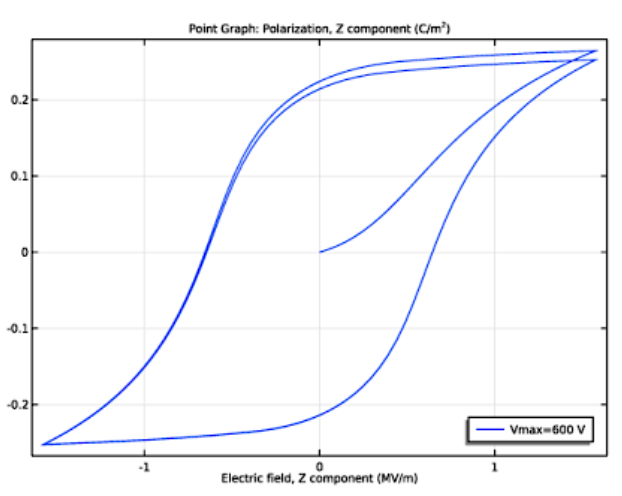
One limitation is that they exhibit hysteresis.
Unimorph / Monomorph
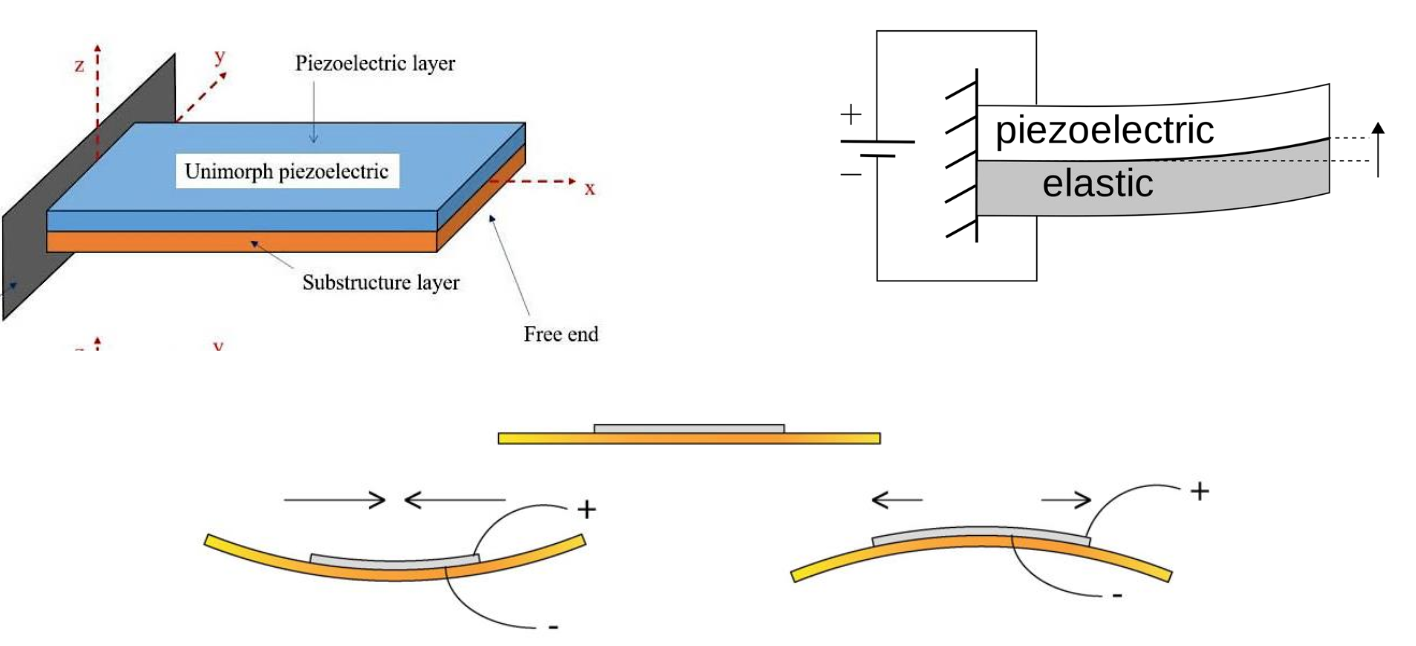
A unimorph (or monomorph) is a cantilever that consists of one active layer and one inactive layer. In the case where active layer is piezoelectric, deformation in that layer may be induced by the application of an electric field. This deformation induces a bending displacement in the cantilever. The inactive layer may be fabricated from an elastic non-piezoelectric material.
Bimorph
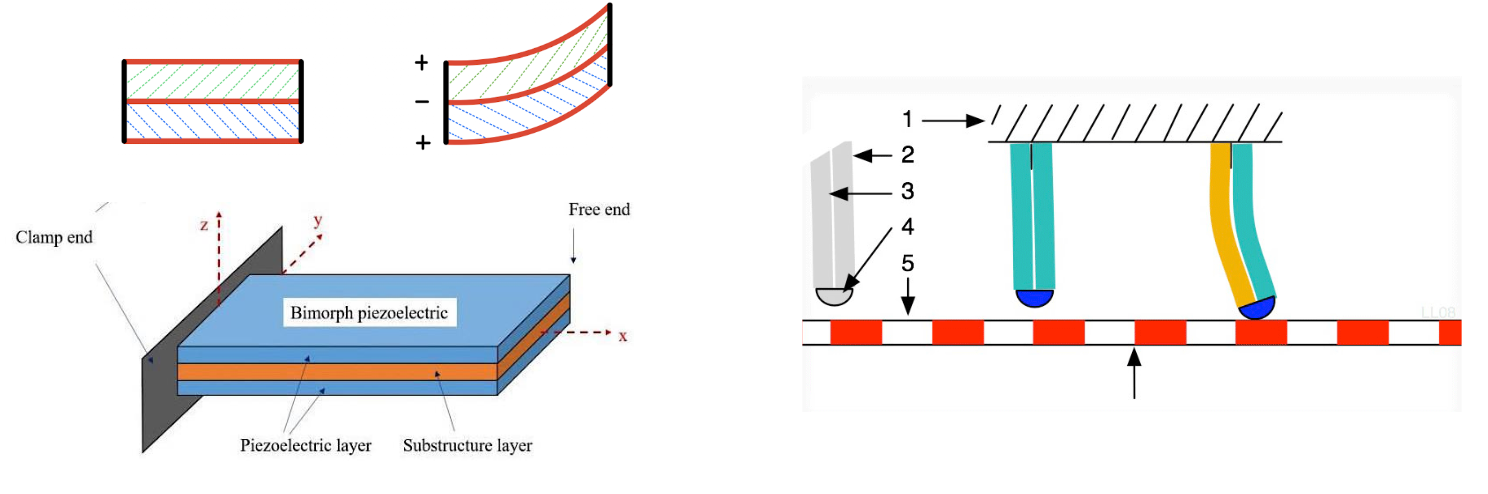
Two slabs of, e.g., PZT are driven so that one slab extends while the other gets shorter, which causes the bimorph to bend. It can also have a passive layer between the two active layers.
In actuator applications, one active layer contracts and the other expands if voltage is applied, thus the bimorph bends.
In sensing applications, bending the bimorph produces voltage which can for example be used to measure displacement or acceleration.
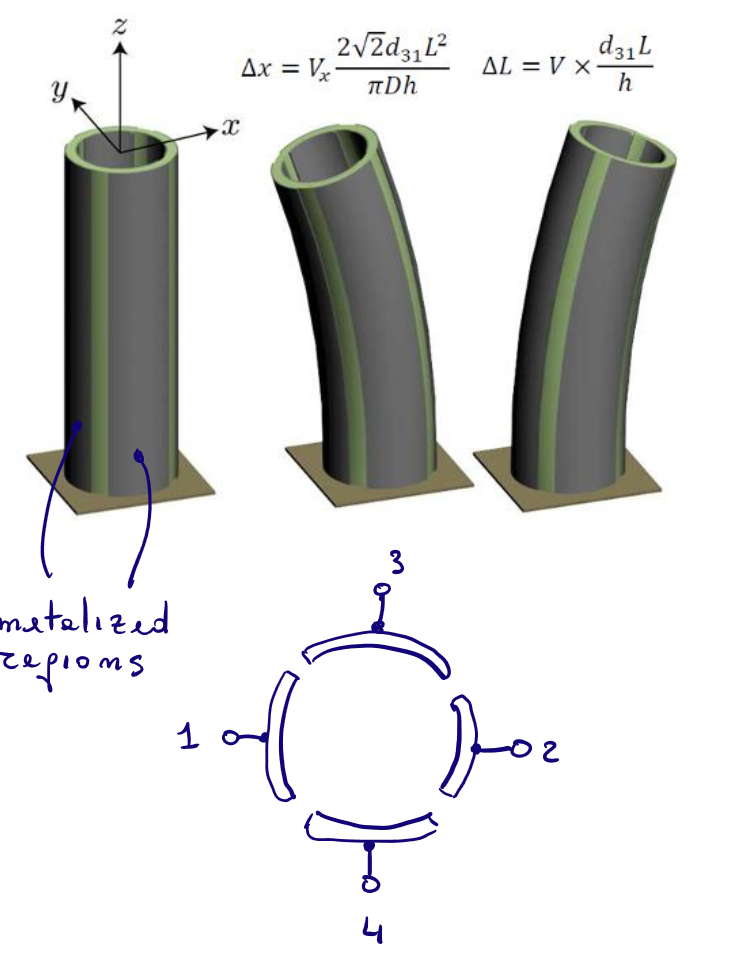
Piezotubes
Typically, such a scanner is made from radially poled piezoelectric material consisting of four external electrodes and either a matching set of sectored internal electrodes or a single internal electrode. The benefit of sectored piezoelectric tubes is that three degrees of freedom motion with nanometer resolution can be obtained in one unit.