Paraxial Approximation
Rays that make small angles (sin θ ~ θ ) with the lenses’ axis (or mirror‘s axis) are called paraxial rays.
Paraxial approximation: Only paraxial rays are considered
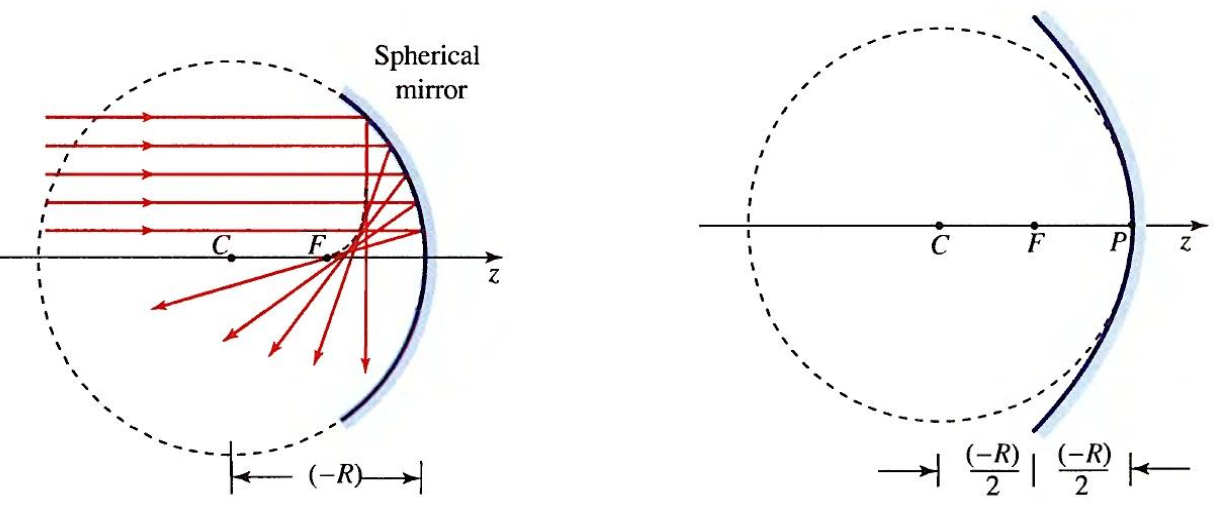
Under paraxial approximation, a spherical mirror has a focusing property like that of the paraboloidal mirror. The body of rules that results from this approximation forms the paraxial optics, also called Gaussian optics.
Lensmakers Equation
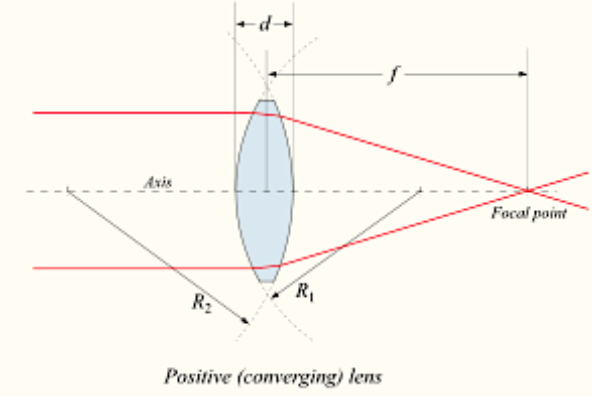
The lensmakers equation:
where n is the refractive index of the lens
Thin Lens Equation
Converging
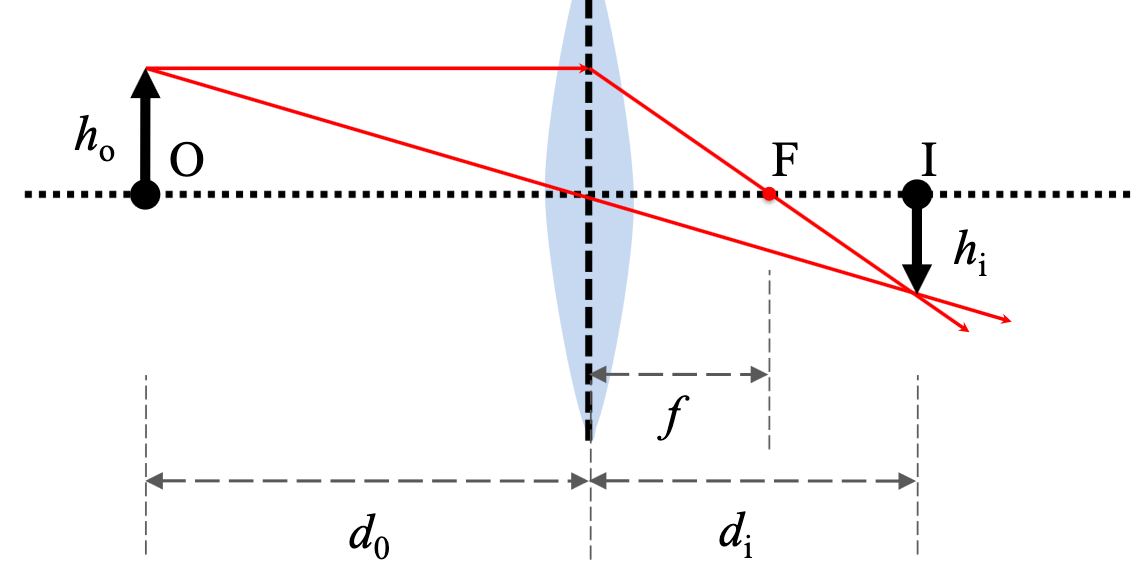
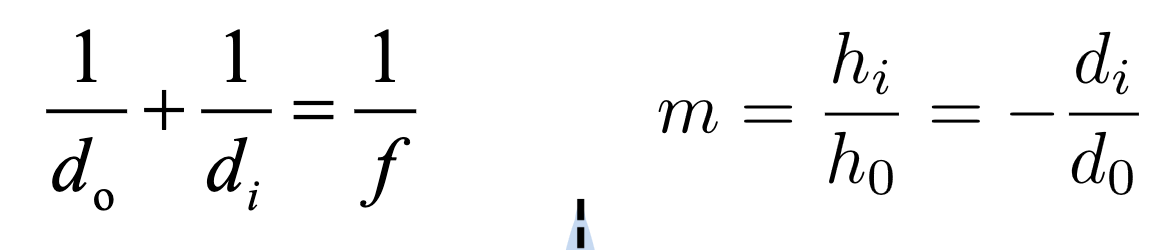
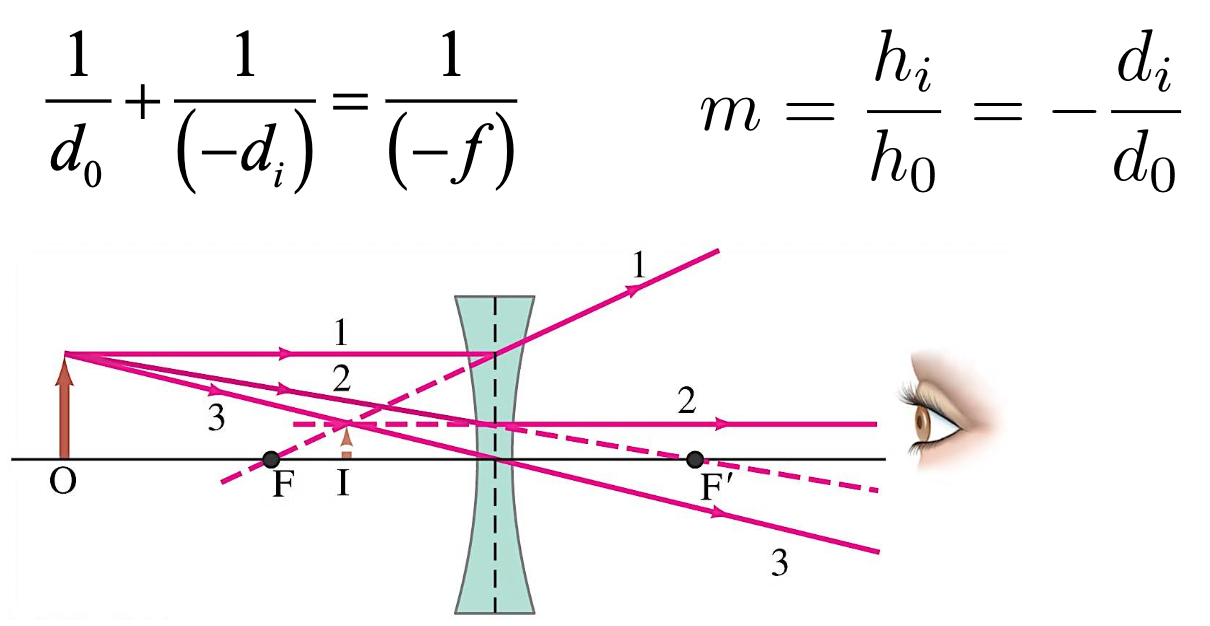
Diverging
Resolving Power and Numerical Aperture (NA)
Where is the refractive index of the lens and is the maximum half-angle of the cone of the light that can enter the lens
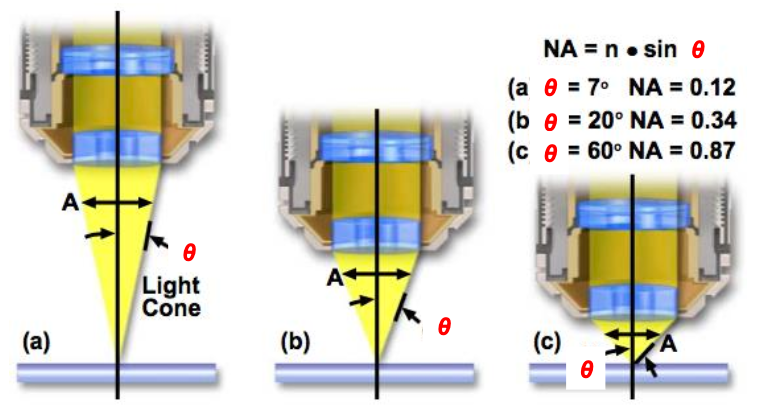
NA also happens to be directly related to the resolving power of the lens:
More specifically we can define our resolution limit :
The factor encompasses any measures that can improve the resolution of imaging, not only in the optics but also the image resolution in photoresist layer. Such improvements have continuously driven down the k1 factor. There have been innovations in every step of imaging process from top to bottom of an optical lithography system. They are all under the name of “Resolution Enhancement Technique” (RET)
With the implementation of RETs such as phase-shifting masks and off-axis illumination, k₁ has been reduced to approximately 0.28 in advanced processes.
The production of 22-nm devices using 193-nm lithography was achieved thanks to a NA of 1.35, which can be seen as a factor of approximately 0.15.
Immersion Lithography
We can improve our resolution by improving our index of refraction, by immersing our lens and sample